

Industries Served — Medical Device
Medical Device Marketing & Commercial Growth
Strategic marketing consulting for medical device CEOs who need their commercial investment to drive measurable pipeline and revenue.
The Situation
Your Sales Team Is Working Hard. Your Pipeline and Customer Acquisition Timeline Doesn't Support Your Thesis. Does Any of This Sound Familiar?
You have talented salespeople. They understand the product. They believe in the clinical value. They are making calls, attending conferences, running demos.
But the pipeline is thin. Deals stall in committee. Reps spend too much time chasing prospects who were never going to buy. Marketing generates leads that sales dismisses as unqualified. Your cost of customer acquisition keeps climbing while growth stays flat.
This is not a sales effort problem. This is a commercial strategy problem.
Medical device companies face a buying environment that has fundamentally shifted. The physician champion who once drove purchasing decisions now needs to convince a value analysis committee, a supply chain team, a CFO, and sometimes a health system's innovation council. The sales cycle has doubled. The number of stakeholders has tripled. And your commercial approach was built for a different era.
The companies winning in this environment are not simply hiring more reps or attending more trade shows. They are building integrated commercial systems that generate qualified demand, equip sales with the right tools for every stakeholder, and create urgency through economic evidence that resonates with buying committees.
The Real Barriers
Four Commercial Challenges to Medical Device Growth — Most Face Several at Once
01
Undefined or Misaligned Ideal Customer Profile
Your sales team is calling on anyone who might buy. Some accounts close quickly; others consume enormous resources and go nowhere. Without a rigorous ICP, marketing cannot target effectively, sales cannot prioritize intelligently, and leadership cannot forecast accurately. Every downstream commercial activity suffers.
02
Demand Generation That Does Not Generate Demand
Marketing runs campaigns, produces content, sponsors conferences, builds email lists. But qualified pipeline is not materializing. The activities look right. The results are wrong. There is a disconnect between marketing activity and commercial outcomes that nobody has diagnosed or fixed. Perhaps there's an awareness issue as well.
03
Stakeholder Messaging That Misses the Mark
Your clinical messaging resonates with physicians. But the economic buyer needs ROI data. The value analysis committee needs total cost of ownership. Supply chain needs standardization benefits. IT needs integration assurance. You have one message when you need five, each tailored to what that stakeholder actually cares about. It must be clinically sound.
04
Value Analysis Committee Engagement That Stalls Deals
Increasingly, the VAC is where medical device deals go to die. Your reps get the clinical champion excited, then watch the opportunity sit in committee review for months. You lack the economic evidence, the presentation format, and the objection responses that VACs require. Competitors who have invested in health economics capabilities are winning business you should be closing. Read more
Our Approach
A Commercial Growth Approach Built for Medical Device Realities
Novastrat Growth works with medical device leadership teams to build commercial systems that generate qualified demand, accelerate pipeline velocity, and improve conversion at every stage of the buying process.
We developed the MAPS Framework specifically to address the interconnected commercial challenges that medical device companies face. MAPS provides a structured approach to aligning your commercial investment with measurable outcomes.

Our Medical Device Commercial Practice Focuses On
Where We Focus
01
Ideal Customer Profile Development
Rigorous analysis to define which accounts represent your highest probability, highest value opportunities. We examine clinical fit, economic buyer characteristics, competitive dynamics, purchasing patterns, and strategic alignment to build an ICP that focuses your entire commercial operation on winnable business. We review closed-won data from the past 12 months and match ICP to market opportunity, and build lists, if desired.
02
Demand Generation Strategy
Design of integrated demand generation programs that reach the right accounts with the right message through the right channels. We connect digital marketing, content strategy, conference presence, clinical education, and sales development into a coordinated system that fills pipeline with qualified opportunities.
03
Stakeholder Messaging Architecture
Development of tailored messaging for every stakeholder in the medical device buying process. Clinical champions, department heads, CFOs, value analysis committees, supply chain leaders, and C-suite executives all require different evidence and different framing. We build the messaging infrastructure that equips your team for every conversation.
04
Health Economics and Value Analysis Committee Strategy
Creation of economic evidence and VAC engagement tools that accelerate committee approvals. This includes total cost of ownership models, ROI calculators, clinical and economic evidence summaries formatted for committee review, and objection response frameworks. We help you win in the room where deals are actually decided.
05
Digital Marketing and Awareness Building
Strategy for building market awareness among target accounts through digital channels. We design approaches that establish thought leadership, generate inbound interest, and support sales efforts with prospects who already understand your differentiation before the first conversation.
06
Pipeline Optimization and Conversion Improvement
Analysis of your current pipeline to identify where deals stall, why they stall, and what interventions will accelerate movement. We examine stage conversion rates, time in stage, competitive loss patterns, and rep productivity to find the leverage points that will improve commercial performance.
07
Lowering Customer Acquisition Cost
Systematic reduction of CAC through better targeting, higher conversion rates, and more efficient channel spend. We identify where your commercial dollars are wasted on low-probability prospects and redesign resource allocation to acquire customers at a cost that supports sustainable growth and healthy unit economics.
08
Increasing Customer Lifetime Value
Strategy for expanding revenue from existing accounts through deeper penetration, expanded utilization, product extensions, and stronger retention. We help you build the post-sale engagement model that transforms one-time buyers into long-term partners who grow with you.
09
KPI Visibility and Agile Decision Making
Design of commercial dashboards and reporting structures that give leadership real-time visibility into pipeline health, conversion metrics, and leading indicators. We help you build the measurement infrastructure that enables quick pivots when market signals change or commercial experiments need adjustment.
10
Market Analysis
Deep examination of market size, segment dynamics, growth trajectories, and adoption patterns. We provide the market intelligence foundation that informs ICP development, positioning decisions, and resource allocation across segments and geographies.
11
Competitive Analysis
Rigorous assessment of competitor positioning, messaging, pricing, channel strategies, and clinical evidence. We identify competitive vulnerabilities, differentiation opportunities, and the specific battlegrounds where you can win. Your sales team gains actionable intelligence for every competitive encounter.
12
Building a Brand
Development of brand positioning and identity that establishes your company as a credible, differentiated player in your category. We help medical device companies build brands that resonate with clinical and economic buyers, support premium positioning, and create preference before the sales conversation begins.
13
Channel Optimization
Analysis and refinement of your channel strategy to maximize reach and efficiency. Whether you sell direct, through distributors, or through a hybrid model, we help you optimize channel mix, improve partner performance, and ensure your channel strategy aligns with your ICP and growth objectives.
Our Approach
Who We Work With
Our medical device clients typically share several characteristics. We work directly with CEOs, often alongside Chief Commercial Officers or VP Marketing leaders who recognize that incremental improvements will not solve structural commercial challenges.
Revenue between $10M and $300M, or earlier stage companies with institutional backing preparing for commercial scale.
VC-backed, PE-backed, or founder-led with growth expectations that current commercial performance is not meeting.
Technology that is clinically differentiated but commercial traction that lags the opportunity.
Sales teams that are capable but lack the targeting, tools, and support infrastructure to perform at their potential.
The Novastrat Growth Engagement Model
A Structured Approach That Moves Efficiently From Diagnosis to Strategy to Execution
Phase 1 — "Measure"
Commercial Diagnostic
A focused assessment of your current commercial performance, ICP definition, demand generation effectiveness, stakeholder messaging, and pipeline dynamics. We identify the highest leverage opportunities and the specific barriers preventing you from capturing them.
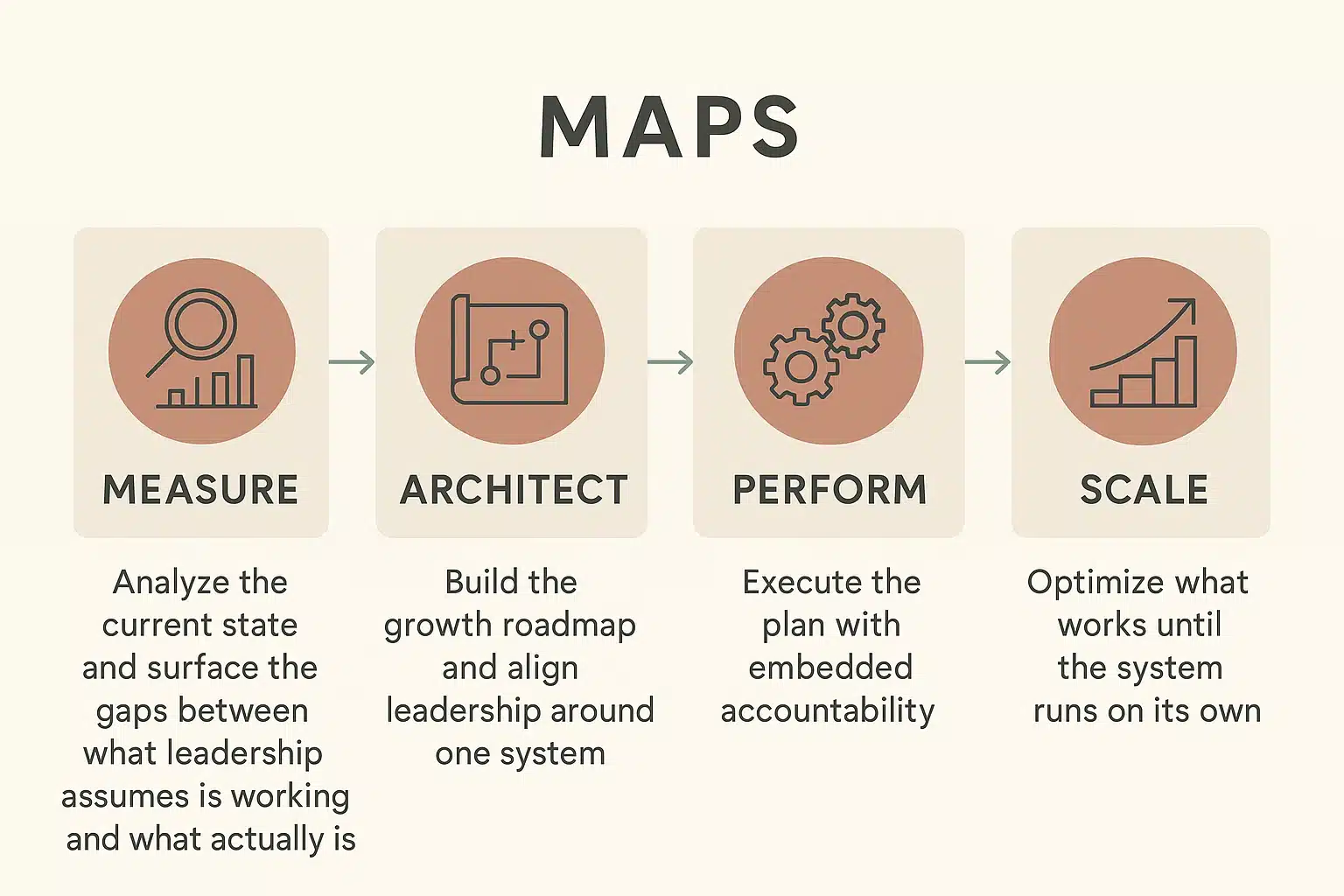

Phase 2 — "Analyze and Prioritize"
Strategy Architecture
Development of a comprehensive commercial growth plan built on the MAPS Framework. This includes ICP documentation, demand generation program design, stakeholder messaging architecture, health economics tool development, and execution milestones. This becomes your working roadmap.
Phase 3 — "Execute" (optional)
Execution Partnership
For CEOs who want ongoing strategic support, we provide continued engagement to track progress, refine strategy as market feedback accumulates, and help navigate execution challenges as your commercial capabilities mature.

Not Sure Which Fits
Start a Conversation
If your medical device company has strong technology but commercial results that are not matching the opportunity, let's talk. A thirty-minute conversation will help us understand your situation and determine whether Novastrat Growth can add value.
FAQ
Frequently Asked Questions
How is Novastrat Growth different from medical device marketing agencies?
Marketing agencies execute campaigns. We design commercial strategy as a fractional CMO resource who has been an operator. Agencies are valuable partners for content production, digital advertising, conference logistics, and creative development. But they typically work from a brief that someone needs to write. We help CEOs and commercial leaders define the strategy that should guide all marketing execution. Many of our clients engage agencies to execute the programs we help design.
Do you replace our internal marketing team?
No. We work alongside internal marketing and commercial teams to elevate their strategic foundation. Our goal is to provide the ICP clarity, messaging architecture, and demand generation strategy that makes your internal team dramatically more effective. We are not competing with your marketing leader; we are equipping them to succeed.
What types of medical device companies do you work with?
We work across device segments including surgical instrumentation, implantables, capital equipment, diagnostic devices, and digital health products. We have particular depth in products that face complex buying processes involving value analysis committees, health system purchasing, and multiple clinical and economic stakeholders. The common thread is technology differentiation combined with commercial underperformance.
How do you approach health economics and VAC strategy?
We help companies build the economic evidence and presentation tools that value analysis committees require. This includes developing total cost of ownership models, creating ROI frameworks tailored to different health system contexts, building evidence summaries that address common committee concerns, and preparing sales teams to present effectively in committee settings. For companies without internal health economics resources, we can develop these capabilities. For companies with existing resources, we help integrate health economics into the broader commercial strategy.
What is the MAPS Framework?
MAPS is our proprietary framework for diagnosing and addressing commercial growth challenges. It provides a structured approach to understanding where commercial performance is breaking down and what interventions will have the highest impact. You can explore the framework in detail on our MAPS Framework page.
How long does a typical engagement last?
The Commercial Diagnostic phase typically takes four to six weeks. Strategy Architecture requires an additional six to ten weeks depending on complexity. Many clients continue with Execution Partnership engagements as they implement commercial changes and refine their approach based on market results.
What outcomes should I expect?
Specific outcomes depend on your situation. Clients typically achieve a documented ICP that focuses commercial resources on winnable accounts, stakeholder messaging that equips sales for every conversation in the buying process, demand generation programs that fill pipeline with qualified opportunities, and health economics tools that accelerate value analysis committee approvals. Within twelve to eighteen months of implementation, successful engagements show measurable improvement in pipeline quality, stage conversion rates, sales cycle length, customer acquisition cost, lifetime value, and revenue growth.
Do you work with investors on portfolio company commercial strategy?
Yes. We engage with venture capital and private equity firms on commercial strategy for portfolio companies, commercial due diligence for prospective investments, and post-investment commercial capability building.
Ready to Replace Random Acts of Marketing
With a System That Works?
Every engagement is scoped to your company, your stage, and your pace.
The first conversation is a fit check, not a pitch.